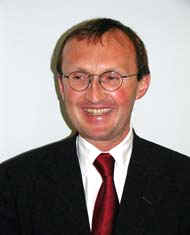
Welcome to hpslex. Hanspeter Schmidt is an attorney-at-law in
Germany, who runs a litigation and advisory law firm dedicated to
Organic Food and Organic Agriculture with these principles:
Some
Legal Aspects of the Regulations (EC) No. 834/2007 and 889/2008 on Organic
Food Products
Hanspeter Schmidt, Attorney-at-law, Germany
December 2008
(1) „Legislation by derogation“ was named as the No. 1 problem and as
one of the reasons for a total revision: 66
„derogations“ were described to as a major deficiency of Regulation
(EEC) No. 2092/91.
1 Here
„derogations“ referred to non-organic farm
inputs which could only be used in organic farming under the condition
„need recognised by the inspection body“. Annex I 2.1. of Regulation
(EC) No. 2092/91 permitted these inputs, such as slurry from
conventional animal husbandry, only exceptionally and only as a
complement to the extent that adequate nutrition of the crop being
rotated or soil conditioning were not possible by organic management
instruments (cultivation of legumes, a multi-annual rotation schedule,
or manure from organic livestock production). In order to decide on
this need organic inspection bodies had to enter into an analytical
exchange on the organic plan of the farm. This professional discourse
resulted in a reliable, mutually agreed management basis for the
organic farmer.
The revised law still permits non-organic fertilisers only where the
nutritional needs of plants cannot be met by organic management
measures. It did not change the management rules. However, now farmers
act on their own risk.
2
They recognise a need and than they use
positive-listed substances on their land. The control body reviews this
practise. If it does not agree in its post factum review, it reports an
infringement. The German „Land“ Baden-Württemberg requires organic
farmers to pay back organic conversion subsidies for five years in
cases where an infringement has been reported by the organic inspection
body. Thus organic farmers risk their farms.
(2) The new Regulation are referred to as „Simpler, clearer and more
transparent“. This may be correct for legal professionals. From others
the new texts require mind-boggling efforts in ZICK-ZACK-reading. Most
actors in the revision process are, for example, likely to have never
understood, what it meant to refer to the rules for mandatory GM
labelling in order to determine the exclusion of traces of genetic
engineering from organic products.
(3) The exclusion of genetically modified organisms (GMO) from organic
production has been connected with the EU scheme on mandatory GM
labelling.
3
This GM labelling scheme provides for numerous loopholes, which allow
for the presence of genetically modified materials beyond 0,9% in
organic products: Unwanted components, for example, such as those
introduced by dust in grain elevators or mills (Fremdbesatz) are
believed not to trigger mandatory GM labelling in accordance to
Regulation (EC) No. 1829/2003. This is supposed to apply regardless of
whether the 0,9 per cent limit is exceeded or not, since the labelling
requirement does not apply at all.
4
The same is correct with respect to substances, which are present in
organic food products, but which are not covered by the term
"ingredient".
5 Not in the
scope of the term "ingredient" are for
example, the constituents of an ingredient which have been temporarily
separated during the manufacturing process and later reintroduced but
not in excess of their original proportions; additives: - whose
presence in a given foodstuff is solely due to the fact that they were
contained in one or more ingredients of that foodstuff, provided that
they serve no technological function in the finished product, - which
are used as processing aids; substances used in the quantities strictly
necessary as solvents or media for additives or flavouring. In
addition, exempt from GM labelling requirements are “substances which
are not additives but are used in the same way and with the same
purpose as processing aids and are still present in the finished
product, even if in altered form.
6
The reference to EU mandatory GM labelling as a sufficiently reliable
indication for organic farmers and processors to exclude genetic
engineering from their practices opens numerals loopholes through which
GM traces may be introduced into the organic products.
(4) The term “technically unavoidable” was thought to provide for safe
distances in coexistence schemes for the separation of GM and organic
cultures. This has no basis in EU practises.
Mandatory GM labelling is not be applied to foods containing a portion
of genetically engineered ingredients no higher than 0,9 per cent of
the food ingredients, but only provided that this presence is
advantageous or technically unavoidable.
Technically unavoidable is not any level of GM presence below the 0,9
per cent level which may be achieved by separation distances, such as
800 meters between GM and organic maize fields. Rather, coexistence
schemes are supposed to deliver no more than levels not higher than 0,9
per cent. Thus this level became a GM target level.
7
(5) Animal species, such as rabbits or fallow deer (Dama dama) and
micro algae, such as chlorella and spirulina, have been subject to
private organic certification in accordance to private standards for
years. They had been excluded from the scope of Regulation (EC) No.
2092/91. Now they are in the scope of the EU organic certification
scheme. Private organic certification is no longer sufficient to market
these products as organic in the European Union. But there are no
EU
production rules. Instead the law of the member state, where the
product originates, applies, if there is any. If there is none, which
is as a rule the case, the private standards which have been accepted
or accepted by the member state apply.
"Accepted" means, that there has been a decision by either a national
legal norm or an administrative decision, based on a procedure provided
for a by a legal norm, which is rarely the case. "Recognised" refers to
member sates, which are the rule, where private standards shaped the
marketing practise and thus determined the buyer’s rightful
expectations with respect to products labelled organic. This rightful
expectation determines at the same time, whether organic labelling is
considered misleading and therefore prohibited by food or unfair
competition law. Consequently, organic inspection of these products has
to be performed by the organic certifiers in EU public organic
certification scheme in accordance to the private standards.
8
(6) There are no rules for organic aquaculture in EU law. Regulation
(EC) No. 889/2008 orders the application of production, labelling and
control rules to be applied mutatis mutandis to products from
aquaculture, seaweed and livestock, such as rabbits and fallow deer.
Here also organic certification is to be performed via direct
application. No recognition decision by national authorities is
required.
Third country products require a decision by the competent authority of
the member state, in which they are imported. The competent authority
has to render its decision on the placing on the market of these
products based on the private standards in the absence of a national
public norm. They may not abstain from granting such
authorisations
based of lack of national norm or the lack of a decision to accept a
private norm, since private norms recognised by market practice are
provide for directly applicable law.
9
(7) Organic yeast is not only in the scope of the EU organic
certification scheme, but Regulation (EC) No. 889/2008 as amended by
Regulation (EC) No. 1234/2008, provides for detailed production rules.
For a transition period until December 2013, products, which comprise
up to half of the agricultural ingredients non-organic yeast, may carry
an organic label.
10
(8) Wine is in the scope of application for both the EU organic
certification scheme as well as a labelling rules. There are
detailed
processing rules yet. In the absence of those, the general rules of EU
law for wine making, which set a rather strict normative standards,
apply for organic wine processing as well. Consequently, there is no
normative basis to require the statement "wine made from crapes from
organic agriculture" in the labelling organic wine.
11
(9) The EU Commission considers a common organic label identification
as essential. However, it refused to harmonise the identification codes
of the organic inspection bodies, which have been a mandatory labelling
requirement for more than ten years.
These codes never developed into common EU-wide markers for organic
food products, since the codes, where developed by each of the member
states separately in such an extremely divergent manner, that even
organic marketing experts would not necessarily recognise organic
inspection IDs on food labels as such. In the IDs no indication of the
use for organic products was required. This has been changed. Now the
structure of the IDs have been harmonised: An explicit reference to
organic production is mandatory.
12
These Ids will work as a clear
indication to consumers, that the food product is subject to the EU
organic inspection scheme.
(10) However, the introduction of a mandatory EU organic logo. The
first logo draft of December 2007, prepared by an external contractor
was very close to the ALDI logo, a large German food chain. Now the
Commission plans a competition for young design and art students. Five
logo drafts from this competition are to be submitted to European
citizens for a vote. The Commission plans to present the best one in a
proposal for an amendment to the Regulation (EC) No. 889/2008 to the
member states. No professional expertise in trademark development and
communication psychology this likely to play a role in this process.
The second effort to develop a EU organic logo might thus fail as well.
(11) If, however, should the logo as planned be developed until July
2010, it
will not gain practical importance in the market, since it will hardly
ever be placed on the show side of food packaging.
13
This is due to the conditions for the use of the logo as they have been
introduced by the Commission. The code number of the control body is to
be placed immediately below the community logo. And the indication of
the place where the agricultural raw materials of which the products is
composed have be farmed, is to be place immediately below this code
number. This geographic origin indication reads "EU Agriculture" or
"non-EU Agriculture" or "EU/non-EU Agriculture".
14
The EU logo can thus not be used on the showside (face visible in the
self) of organic food products as an eye-catcher, but only in the
context of a rather clumsy mandatory EU organic labelling tableau of
three obligatory elements.
Product managers will ascertain, that the EU organic logo is always
placed on the back side of the packaging. Here all the other mandatory
indications required under EU food law, such as the list of
ingredients, are typically found in accordance to well established
marketing practices.
The requirement, to combine the community logo, the code number and the
geographic origin indication, to this mandatory organic label
tableau,
practically annihilate usefulness of the logo, whatever its graphic
design will be. Its not easy to understand, what led the Commission to
propose this mandatory organic labelling tableau. This requirement will
be instrumental to provide for the permanent presence of national logos
on the show side of products while the EU organic logo will be placed
on the back. The mandatory organic labelling tableau provides for a
bright and permanent future for national logos such as the "Biosiegel"
in Germany or the "AB"-logo in France. It seems that the EU Commission
is not very clear in the implementation of its policies.
1
http://www.organic-revision.org/dissim/con06/Standards_variation
_Kim_Boesen_Odense_D3.pdf, ppt 4
2 When member states asked in the 74th meeting of
the Standing
committee on Organic Farming on 26 May 2008 to leave the system of need
recognition by the organic control bodies intact, the Commission
refused to do so. It argued, that this could not be done, since this
was not foreseen by Regulation (EC) No. 834/2007. This explanation was
incorrect, since there is nothing in Regulation (EC) No. 834/2007 which
required or made it even plausible to replace the prior system of need
recognition. The Council Regulation transferred to the Commission broad
law-making powers to determine whether to change the need recognition
system or not. The Commission obviously considered necessary to limit
the role of organic certifiers in the shaping of organic managment
plans.
3 Article 9 of Regulation (EC) No. 834/2007
4 CIAA (EU Food and Drink Confederation), GUIDELINES
FOR THE
EUROPEAN FOOD AND DRINK INDUSTRIES, New EU regulations on GMOs EU
Regulations on Genetically Modified Food and Feed ((EC) No 1829/2003)
& Traceability and Labelling of GMO and of Food and Feed Products
produced from GMO ((EC) No 1830/2003), Brussels 2005;
http://www.ciaa.be/documents/brochures/GM%20guidelines.pdf
5 Article 2 Number 13 of Regulation (EC) No.
1829/2003; Article 6 (4) of Directive 2000/13/EC
6 Article 1c of Directive 2003/89/EC
7 Article 12 (29 of Regulation (EC) No. 1829/2003
8 Article 42 of Regulation (EC) No. 834/2007
9 Article 19 of Regulation (EC) No.
1235/2008
10 Article 27 (2)(c) of Regulation (EC) No. 889/2008
11 Consideration (7) and Article 2 (2)(b) of Regulation (EC) No.
834/2007
12 Article 58 (1) of Regulation (EC) No. 889/2008
13 Regulation (EC) No.
967/2008
14 Required under Article 24 of Regulation (EC) No. 834/2007 in
accordance to Article 58 of Regulation (EC) No. 889/2008 in a
prescribed tableau